
What Is Life Insurance? (Simple Explanation Anyone Can Understand)
What Is Life Insurance?
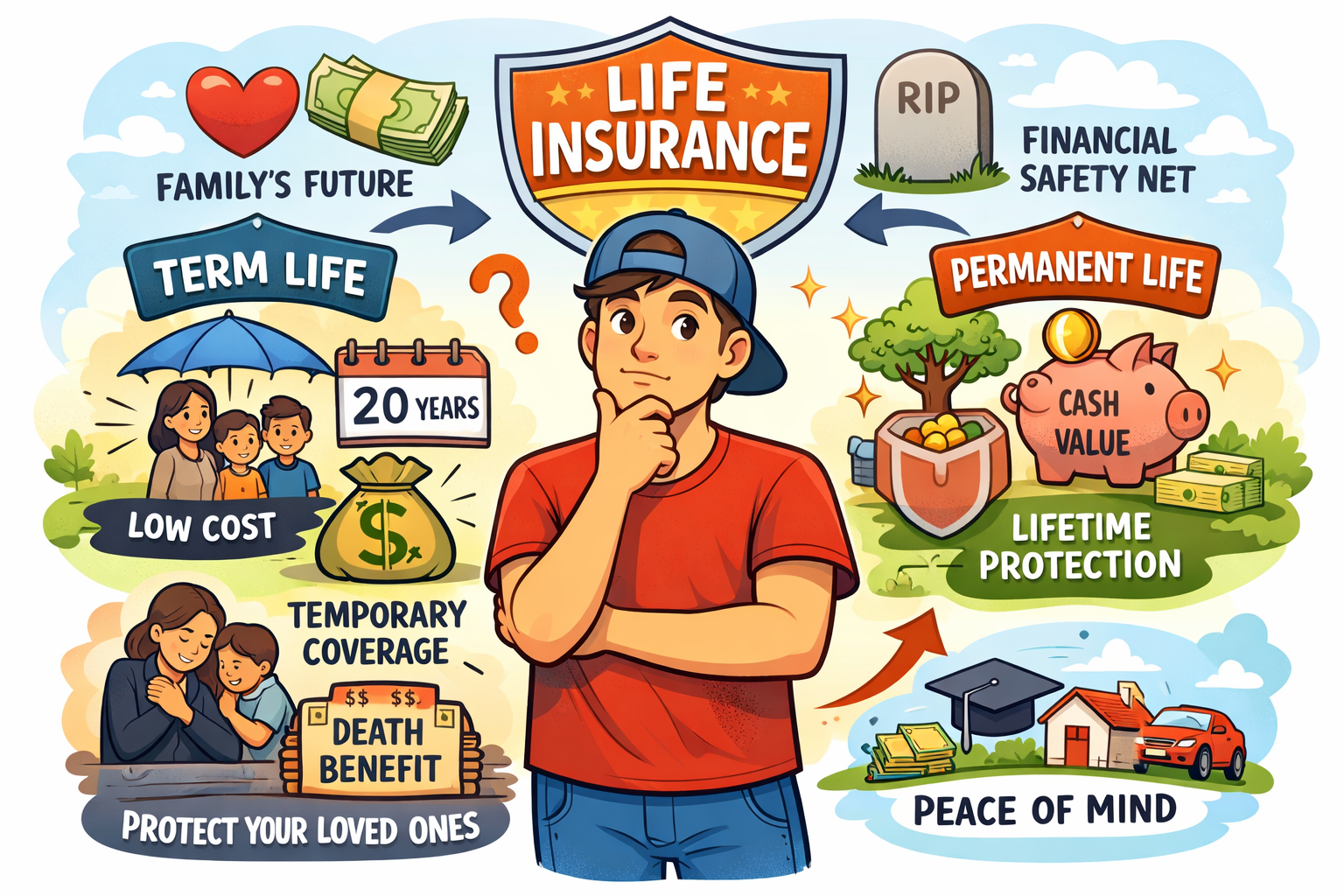
Life insurance is one of those things you’ve probably heard about—but no one really sits down and explains it in a simple way. So let’s break it down like we’re talking to someone who’s just getting started with money, careers, and real-life responsibilities.
The Simple Definition
Life insurance is a contract that pays money to the people you care about if you pass away.
That’s it.
You pay a small amount regularly (called a premium), and in return, the insurance company promises to give a much larger amount of money (called a death benefit) to your chosen people (your beneficiaries).
Why Does Life Insurance Exist?
Think about this:
If someone depends on you—financially or emotionally—and something happens to you, life insurance steps in to help them stay stable.
It’s not really about you.
It’s about:
- Making sure your family isn’t stuck with bills
- Replacing your income
- Giving your loved ones time to breathe instead of panic
A Real-Life Example
Let’s say you’re 25, working, and helping your parents or planning to start a family one day.
You get a life insurance policy for $500,000.
- You might pay something like $20–$40/month (depending on health and type)
- If something happens to you, your family gets $500,000
That money could:
- Pay off debt
- Cover rent or a mortgage
- Fund college
- Keep everything from falling apart financially
The Two Main Types (Keep It Simple)
You’ll hear a lot of complicated terms, but most life insurance falls into two categories:
1. Term Life Insurance (Simple & Affordable)
- Covers you for a set period (like 10, 20, or 30 years)
- Lower cost
- Pure protection
Think of it like renting insurance.
If nothing happens during that time, the policy ends.
2. Permanent Life Insurance (Lifetime + Money Component)
- Covers you for your entire life
- More expensive
- Builds some form of cash value over time
Think of it like owning something that grows slowly while protecting you.
This includes things like Indexed Universal Life (IUL), Whole Life, etc.
Do You Even Need Life Insurance at 18?
Good question.
You might not need it yet, but here’s why people still consider it early:
- It’s cheapest when you’re young and healthy
- Locks in insurability (in case your health changes later)
- Can be used as a financial strategy tool, not just protection
Even if no one depends on you now, your future self might benefit from setting it up early.
Common Misconceptions
Let’s clear these up:
“It’s only for older people.”
No—young people get the best rates.
“It’s too expensive.”
Basic coverage can cost less than a few subscriptions.
“I don’t need it if I’m single.”
Maybe not urgently—but planning ahead can save you money and stress later.
What Makes a Good Policy?
This is where things get important.
A good life insurance policy should:
- Fit your budget
- Match your goals (protection vs. growth)
- Not be overloaded with unnecessary costs
- Be structured correctly from the start
Because here’s the truth:
Not all policies are built the same—even if they sound similar.
How to Think About It (The Right Mindset)
Don’t think of life insurance as just another bill.
Think of it as:
- A financial safety net
- A tool for long-term planning
- A way to protect your future family before they exist
It’s less about fear—and more about control.
Final Thoughts
Life insurance is one of the few financial tools that can instantly create wealth for your family when it’s needed most.
You don’t have to rush into anything—but you should understand it.
Because the earlier you learn how it works, the better decisions you’ll make later.
Want Help Figuring Out What Makes Sense?
If you ever decide to explore your options, get clarity, or just want someone to break things down without the sales pressure:
Ask the Policy Sage.
We help you understand:
- What type of policy actually fits your situation
- How to avoid common mistakes
- How to structure it the right way from day one
👉 Visit: https://www.askthepolicysage.com/
No pressure—just real guidance so you can make the best decision for yourself.